ShipX
HomeServices
Login / Signup
Book a Demo
Cross-Border

Why Cross-Border Logistics in Vietnam Needs a Complete Reset

L
luyen@shipx.asia
May 15, 2026
Why Cross-Border Logistics in Vietnam Needs a Complete Reset
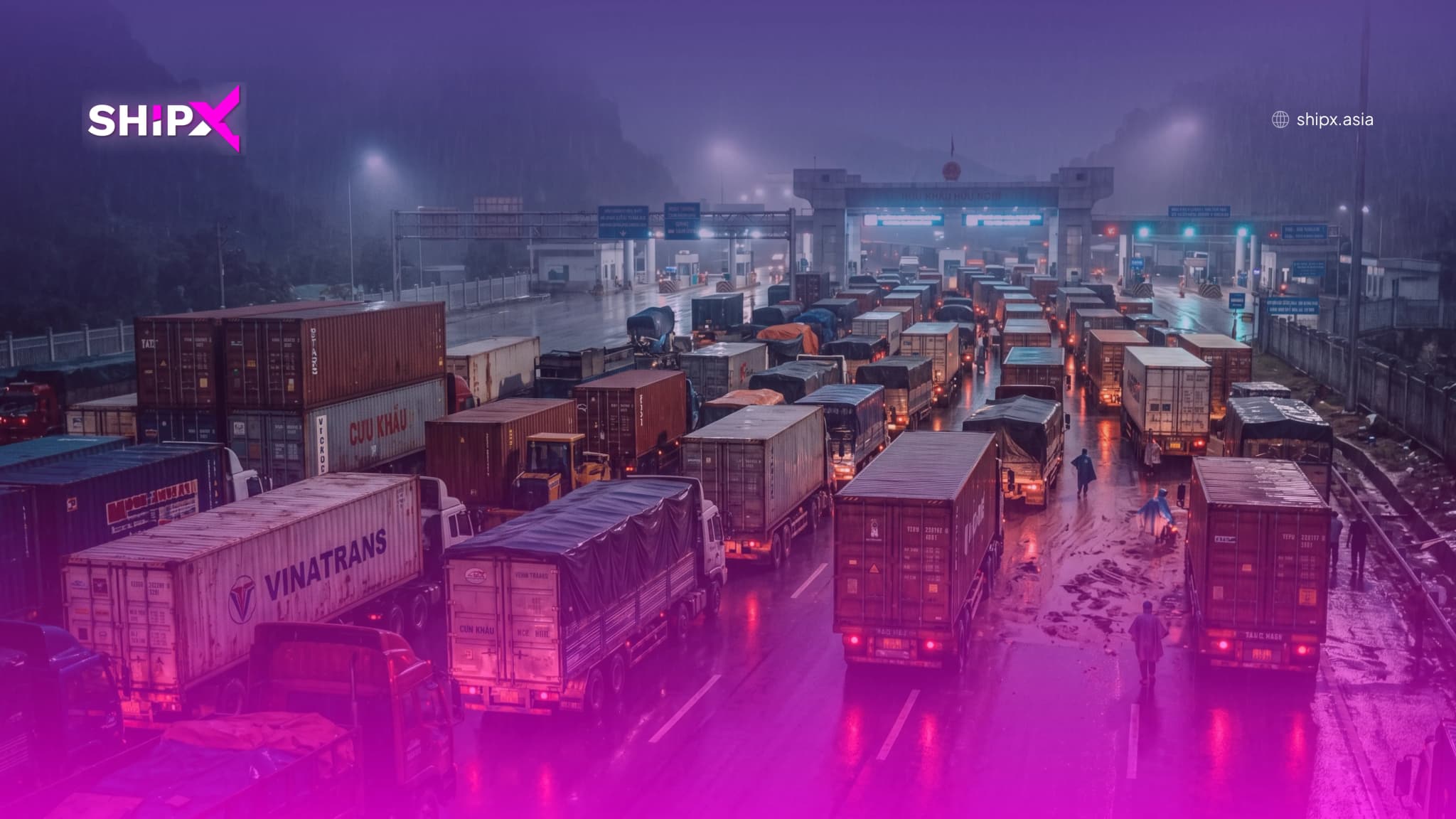
ShipX is an all-in-one cross-border logistics platform for businesses in Southeast Asia. Vietnam’s exporters are paying a tax that does not appear on any invoice. Logistics and trade-facilitation costs in Vietnam run at roughly 16.5% of GDP — one of the highest ratios in the region, well above the ASEAN average of about 13% and roughly double what is typical in mature markets. Every percentage point in that ratio is a real cost: a customs hold, a parcel re-routed through a third country, a buyer cancelling because the tracking page has not updated in five days. Sellers shipping from Ho Chi Minh City or Hanoi to Amazon US, eBay buyers, or DTC customers in Europe absorb the cost in three ways — thinner margins, slower cash cycles, and lower marketplace ratings. Incremental fixes — a better tracking widget, a new carrier integration, a discount on one lane — cannot close that gap. The system itself needs a reset.

Five problems incremental fixes cannot solve

1. Fragmentation is the default state A typical Vietnam exporter ships across 4–6 carriers, 3–5 marketplaces, 2–3 warehouses, and a customs broker who lives in WhatsApp. Each handoff is a place where data, time, and money leak. ShipX runs 45+ carrier partners through a single operating layer, so the seller picks the destination, not the carrier — and the platform routes underneath. 2. Transit time is treated as a guess, not a commitment Sellers are told “5–10 business days” and price their listings against the optimistic end. When parcels land at day 14, buyers churn. Real transit time is observable — every parcel ShipX processes (2.5M+ orders to date) feeds the model that prices, predicts, and re-routes. 3. Customs is a black box The single largest source of unexpected fees is documentation that arrives at the border incomplete. The reset is to handle HS codes, commercial invoices, and restricted-commodity screening at the seller level before the parcel leaves the warehouse, not after. ShipX automates this end-to-end across 200+ destinations. 4. De minimis and tariff rules keep moving Recent changes to US, EU, and UK import thresholds have made yesterday’s pricing strategy obsolete. A Vietnam-to-US shipment that cleared duty-free in 2023 may now carry duty plus a brokerage fee. A reset means pricing logic that absorbs the change automatically — not a quarterly spreadsheet review. 5. Visibility ends at the border Most sellers can track a parcel out of Vietnam but go dark after the first international hop. Buyers do not care about the handoff — they want a single tracking page that updates from pickup to doorbell. Unified tracking across the full network is the floor, not a premium feature. What “AI-native logistics” actually changes The phrase is over-used; the substance is narrow. AI changes three things in cross-border:
  • Pricing — quotes that reflect today’s carrier capacity, fuel surcharges, and lane economics, not last quarter’s rate card.
  • Routing — the optimal carrier for this parcel, this destination, this delivery window, recalculated per shipment, not per contract year.
  • Resolution — exceptions like customs holds, mis-scans, or address corrections detected and acted on before the seller files a ticket.
ShipX is built around that layer: 5 ASEAN offices (Vietnam, Thailand, Malaysia, Indonesia, Singapore), 45+ carrier partners, coverage in 200+ countries, and 2.5M+ orders processed — all routed through one platform with one set of credentials. What a reset looks like for a Vietnam exporter In practical terms:
  • One login across every shipping motion — express, FBA prep, DTC, sea freight.
  • Customs documentation generated before the parcel leaves the warehouse.
  • Live, unified tracking across origin, line haul, and last mile.
  • Pricing that reflects today’s reality, not a quarterly contract.
  • A single team accountable when something goes wrong.
That is the reset. It is not faster shipping. It is fewer surprises — which is what 2,500+ active ShipX clients optimise for first.

FAQ

What does cross-border logistics cost a Vietnam exporter today?
Logistics and trade-facilitation costs run at roughly 16.5% of Vietnam’s GDP — well above the ASEAN average of about 13%. For an SME exporter, that translates to thinner margins, longer cash cycles, and slower marketplace growth.
Is fragmented carrier choice actually a problem, or a feature?
It is a feature for a 3PL selling its own routes. For the seller, it is a problem — every additional carrier integration is a place where tracking, customs, and accountability break. ShipX consolidates 45+ carriers into one routing layer so the seller picks the destination, not the carrier.
How does AI change cross-border logistics in Vietnam specifically?
In three places: pricing recalculated against live carrier capacity, routing decided per shipment rather than per annual contract, and exception resolution triggered before the seller files a ticket. Volume calibrates the model — ShipX has processed 2.5M+ orders to date.
What is ShipX, and where does it operate?
ShipX is an all-in-one cross-border logistics platform for businesses in Southeast Asia. It runs from 5 ASEAN offices (Vietnam, Thailand, Malaysia, Indonesia, Singapore), with 45+ carrier partners and coverage across 200+ destinations.
Is a full reset really needed, or can sellers just optimise what they have?
Incremental optimisation works when the system is broadly sound. When logistics costs sit at 16.5% of GDP and the average parcel passes through four or more unconnected handoffs, the cost of incrementalism is structural. The reset is in the operating layer, not in any single component.
See the reset applied to your lanes
Vietnam exporters can request a routing review from ShipX. We map your current carriers, identify the leakage points, and propose a consolidated routing plan — typically within five business days. Visit shipx.asia or contact your nearest ASEAN office.

Found this helpful? Pass it on

Bookmark Page